Use Case: How Rennteam reduced carbon parts weight by 61% with sallea’s salt cores
Designing beyond manufacturing limits
For its 2026 race car, Formula Student Rennteam from Stuttgart set out to further reduce weight and improve aerodynamic performance without letting manufacturing constrains dictate the geometry of its composite parts.
Previously tested handmade salt-paste cores deformed during curing and couldn’t reliably maintain the required shape for carbon elements.
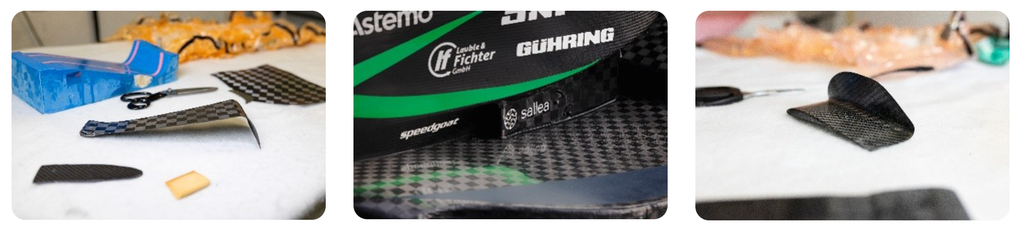
From left: final carbon-fiber air duct part, close-up of the X0711-3 race car, and final carbon-fiber wheel shield.
Bringing 3D design freedom into composite manufacturing
Together, we selected two aerodynamic parts for this project: an air duct and a wheel shield. Sallea produced customized 3D-printed saltBASE cores and supplied them ready for composite processing.

Rennteam’s aerodynamics team laminated the carbon fiber directly onto the cores by hand layup and cured the parts in an autoclave, no surface treatment of the core was needed. The cores maintained their geometry throughout processing and were completely washed out only with water, leaving hollow and lightweight carbon-fiber parts.
From Formula Student to motorsport and automotive
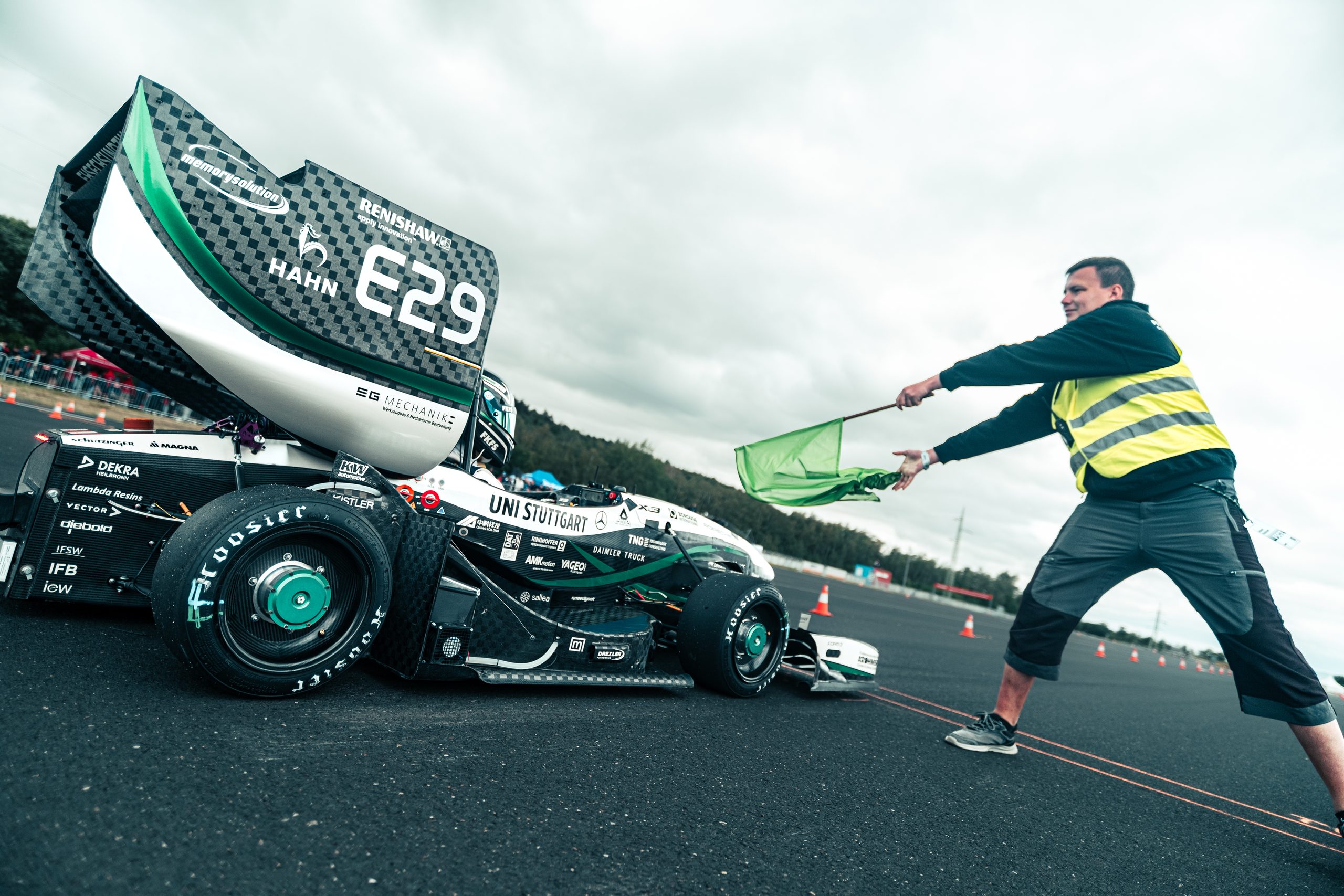
Both components were integrated into Rennteam X0711-3 race car for the 2026 Formula Student season. The hollow air duct was 52% lighter, while the wheel shield achieved a weight reduction of 61%. The car competed in the Czech Republic, Austria and Germany, with the season highlight being P2 overall at Formula Student Czech 2026.
For sallea, the project shows what becomes possible when complex composite geometries no longer have to be designed around the core. The same approach can open new opportunities for lightweight, hollow structures across high-performance motorsport and automotive applications.